Gist Memories
The Painted Attachments of Tiffany Stronsky
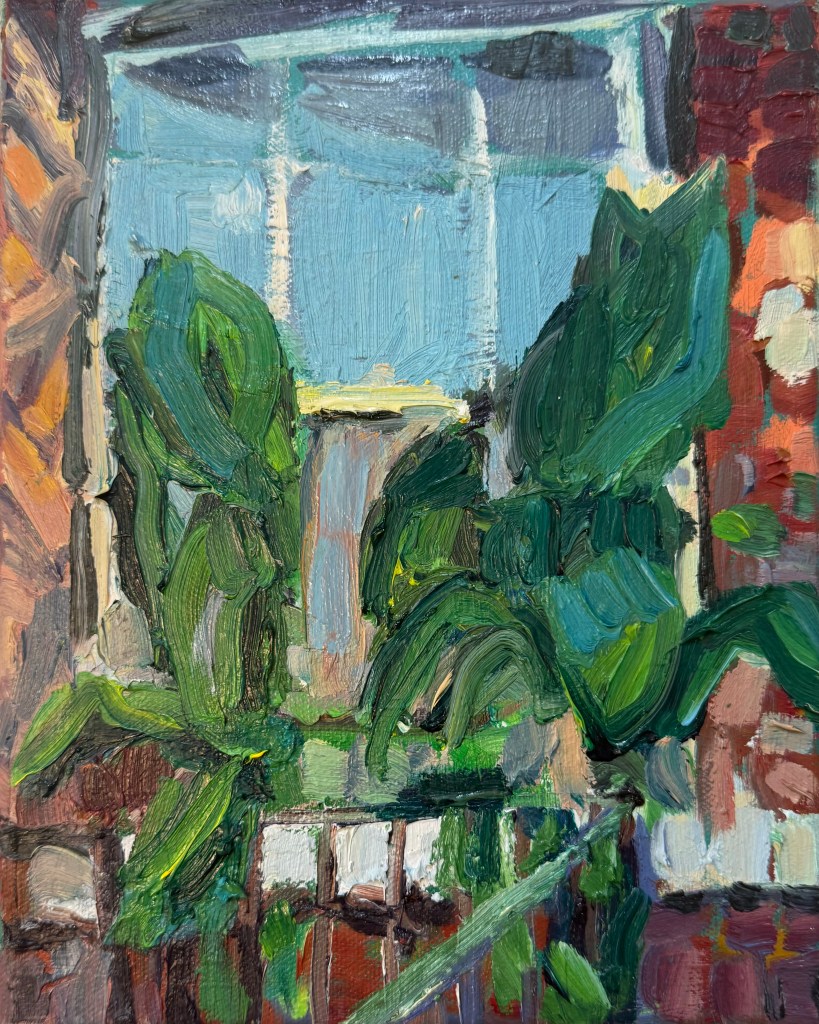
Tiffany Stronsky’s paintings belong to a lineage of artists who understood the organic world as more than subject matter. Her work is lush with art historical memory, yet unmistakably grounded in the contemporary Midwest. The thickness of her paint brings Antoine Vollon’s Mound of Butter to mind, not through shared subject matter, but through the sense that oil itself has become tangible. Paint reads as spreadable, weighty, and alive. Her attention to ordinary surroundings also recalls Lois Dodd, whose work finds charge in windows, houses, trees, and shadows without overstating them. Stronsky does not imitate either artist. She extends that lineage into Chicago, where oil carries the sensation of a locale after clear description has begun to blur.
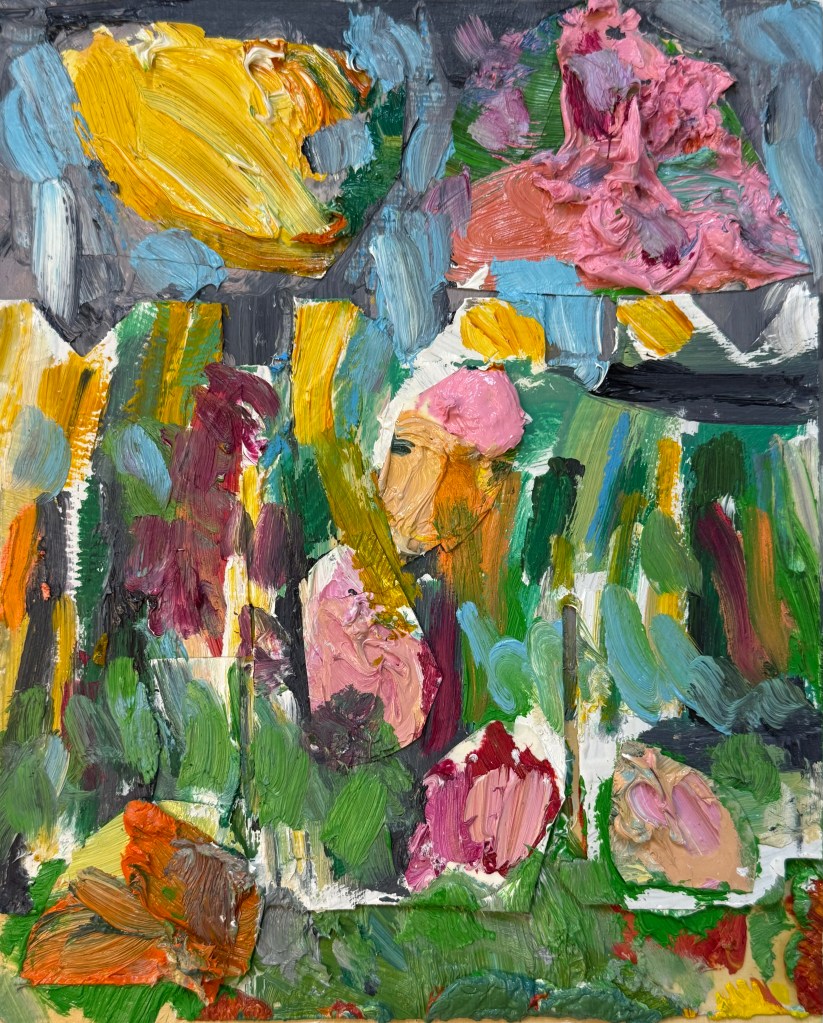
Her painterliness establishes this first. Thick impasto gathers across the canvas with palpable insistence. Dragged, lifted, smeared, and pressed, the oil becomes pastose, developing a richness that nearly tips into excess. That abundance matters throughout the work. Stronsky’s compositions remain legible, yet they resist straightforward description. A street, flower, or patch of foliage may come forward almost pareidolically, summoned through color and context before loosening again into paint. With cooler tones often holding the image in place, warmer passages appear unevenly, like pieces of memory returning out of order.
In the interiors, human presence is suggested rather than shown. The absence of figures does not simply imply that someone has stepped away. It places the viewer inside the room as the sole human presence, alone at the bar and made hazy by drink. This marks a slight departure within Stronsky’s work. The painting more forcefully lulls us into the role of the inebriated one, and the objects around us are filtered through that same unstable vision.
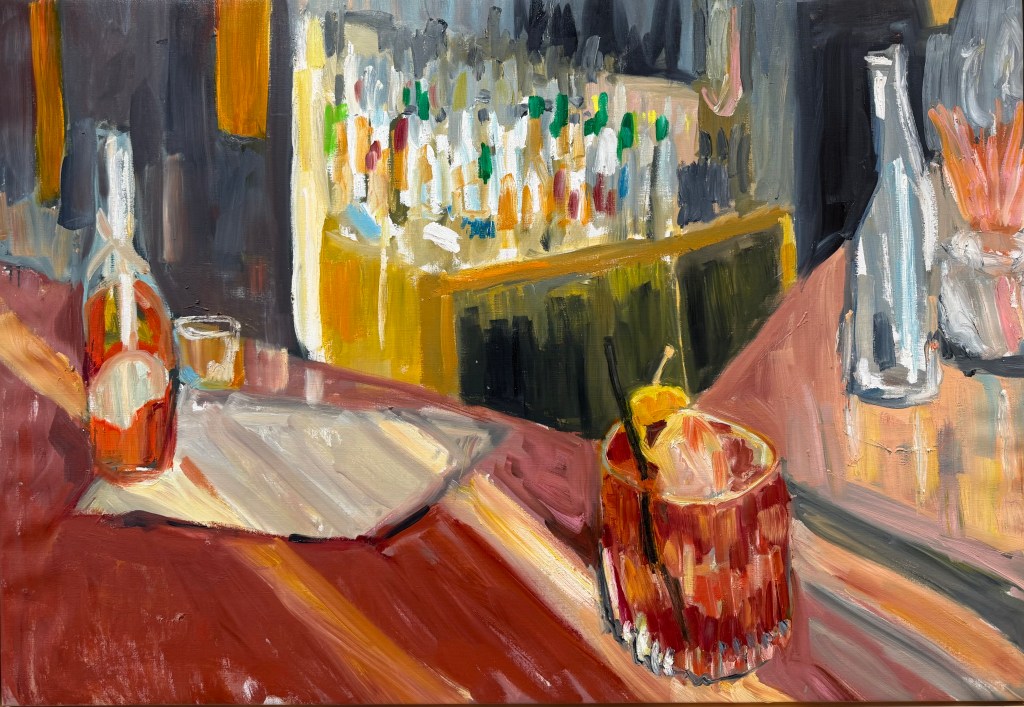
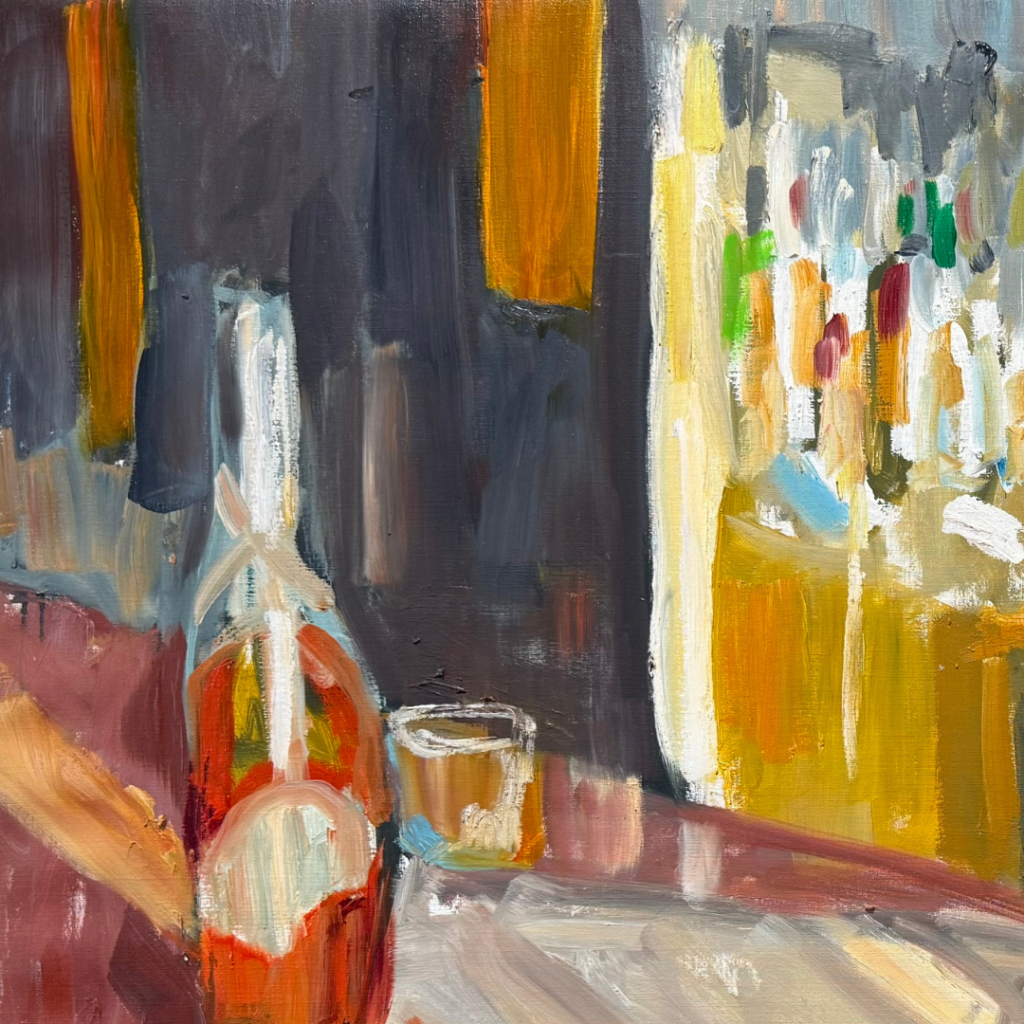
A glass, a bottle, a flare of color, and the loose rhythm of the bar shelves do not resolve into exact description. They are guessed into place. Shapes remain recognizable because the mind has seen these things before and can complete them from blur, color, and placement. The room feels real in the way a room can feel real through intoxication: indistinct, but still spatial, atmospheric, and inhabited.
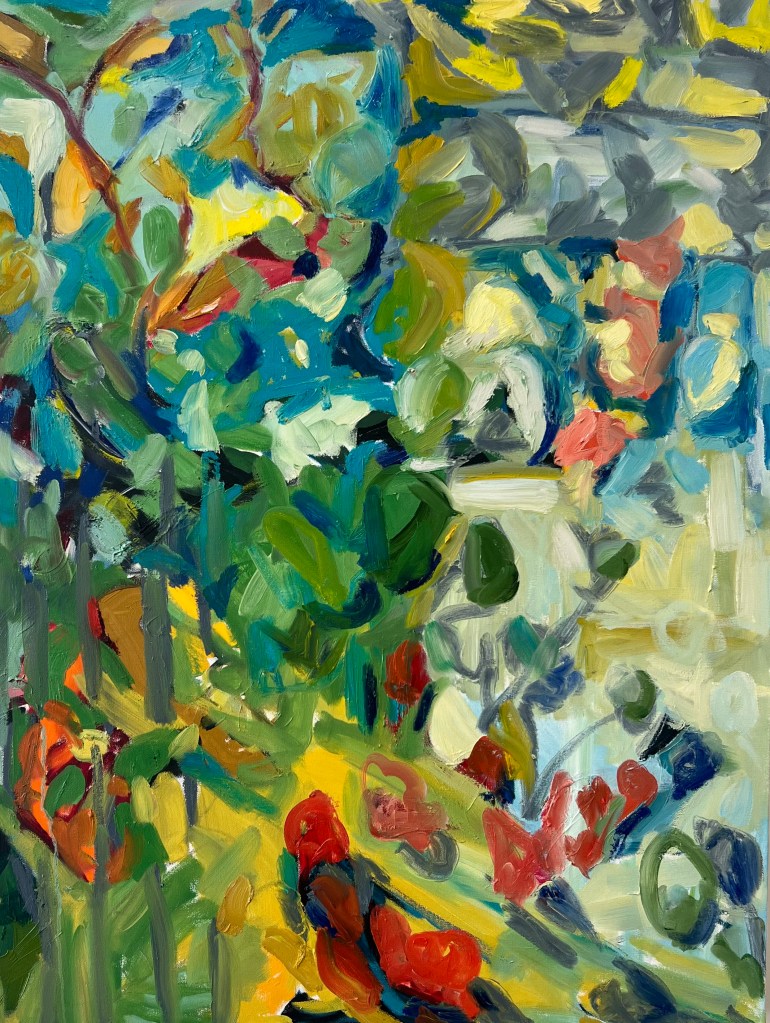
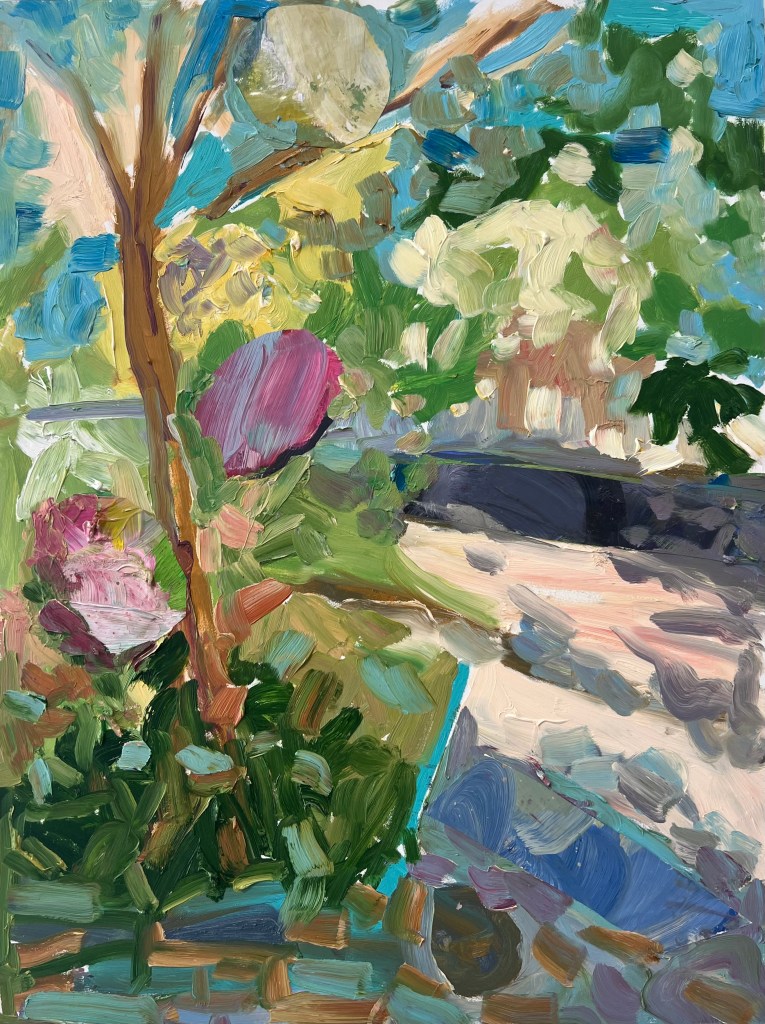
The foliage-based works move into a different instability, somewhere between object and sensation. Flowers arrive through gesture before settling into nameable form. Pink thickens into petal, yellow presses forward as heat, and green anchors the image with bodily force. Across these works, color overtakes legibility and becomes the dominant force of the image.
Melding her approaches to interiors and botanical scenes, the urban works present streets and buildings in constant exchange with organic life. In a Chicago aerial view, the locale is unmistakable, though never fully readable. The city is identifiable through familiarity, through the feel of a place already known. Its grid registers in rhythm, while the lake undulates at the edge and opens the composition outward — it seems active, dense, and in motion.
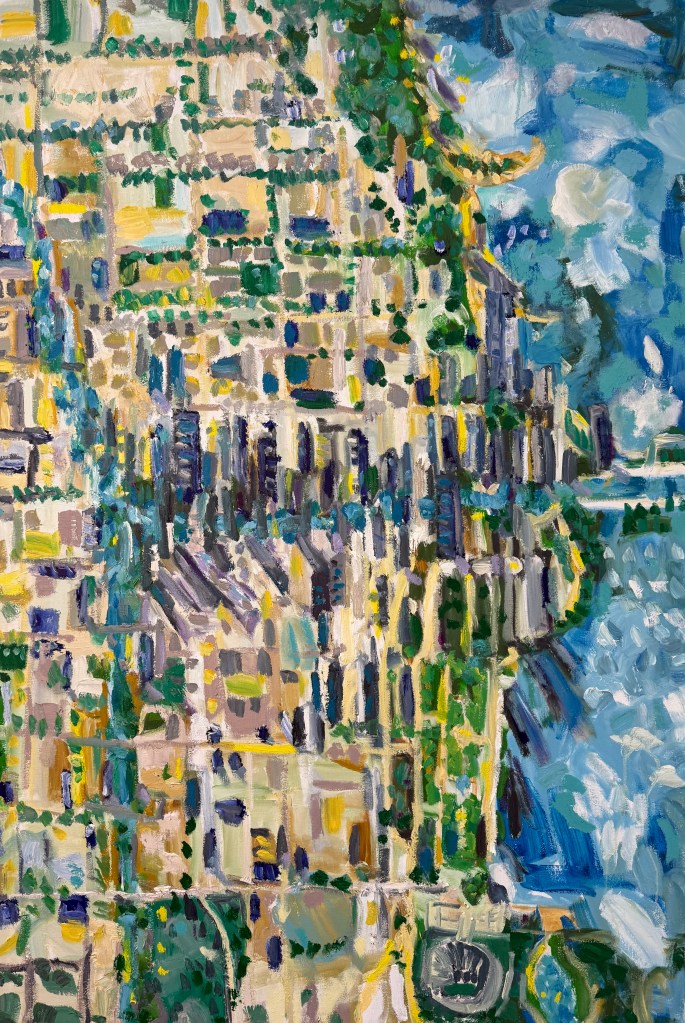
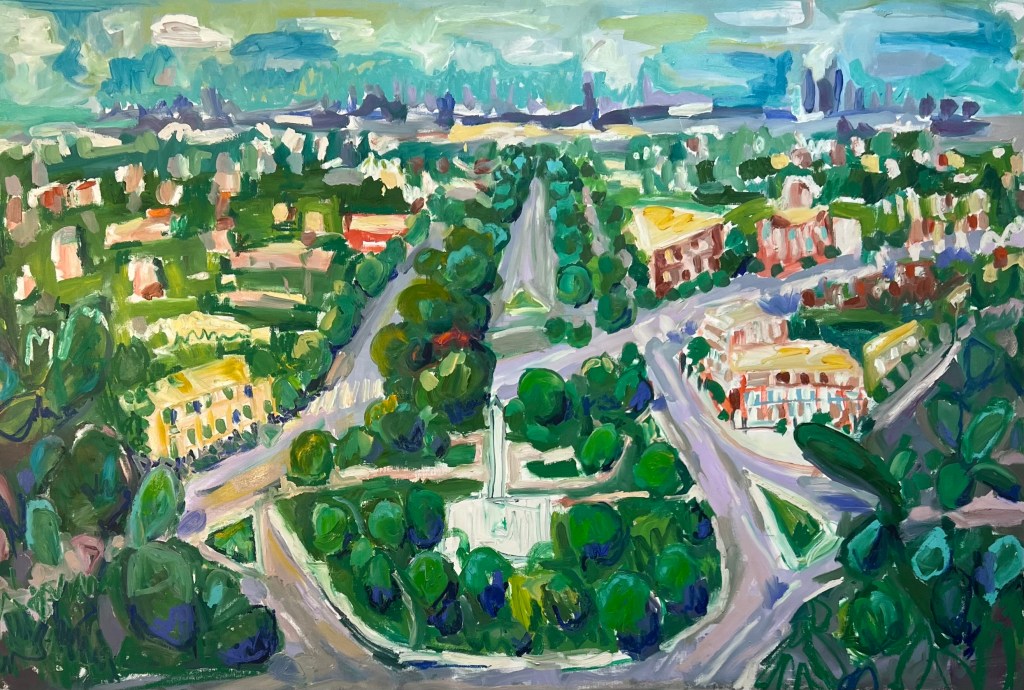
In a broad view of Logan Boulevard, Stronsky gives a constructed environment back to a natural vantage point. The bird’s-eye perspective matters because it is not the human view of the street, shaped by traffic, walking, signage, or daily passage. It belongs to flight, to a form of looking that precedes the human-governed land. From that height, the built environment loses its usual primacy. Architecture remains present, yet flora overwhelms it. A window or pathway may come forward for a moment, then slide back into vegetal pigment. Human alteration becomes visible, but small.
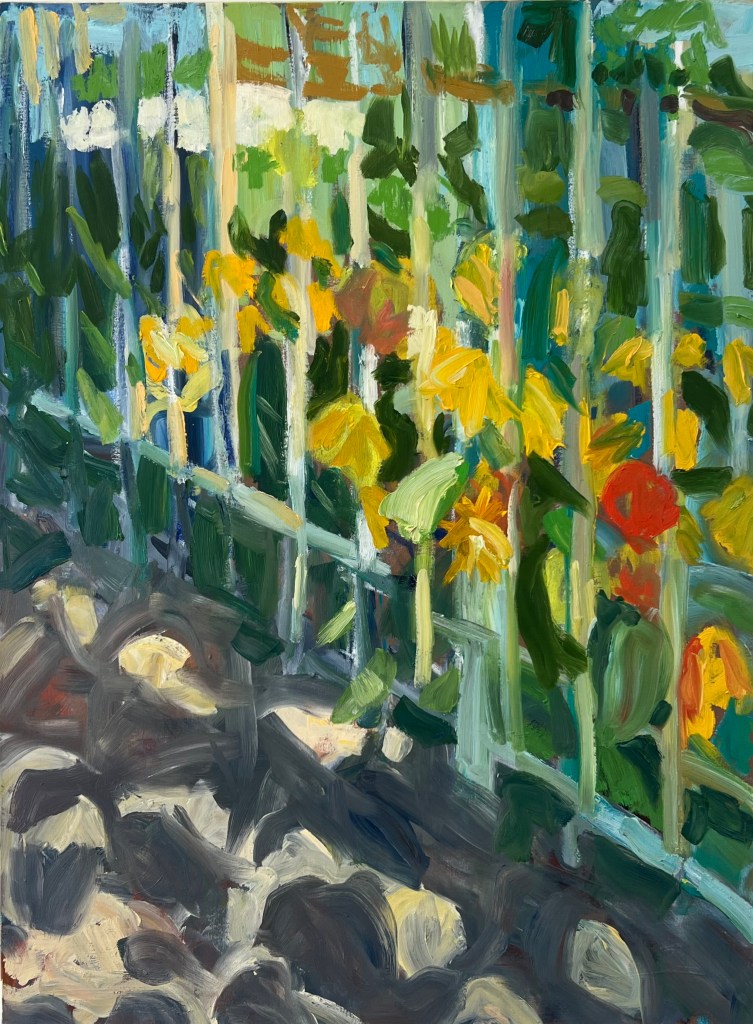
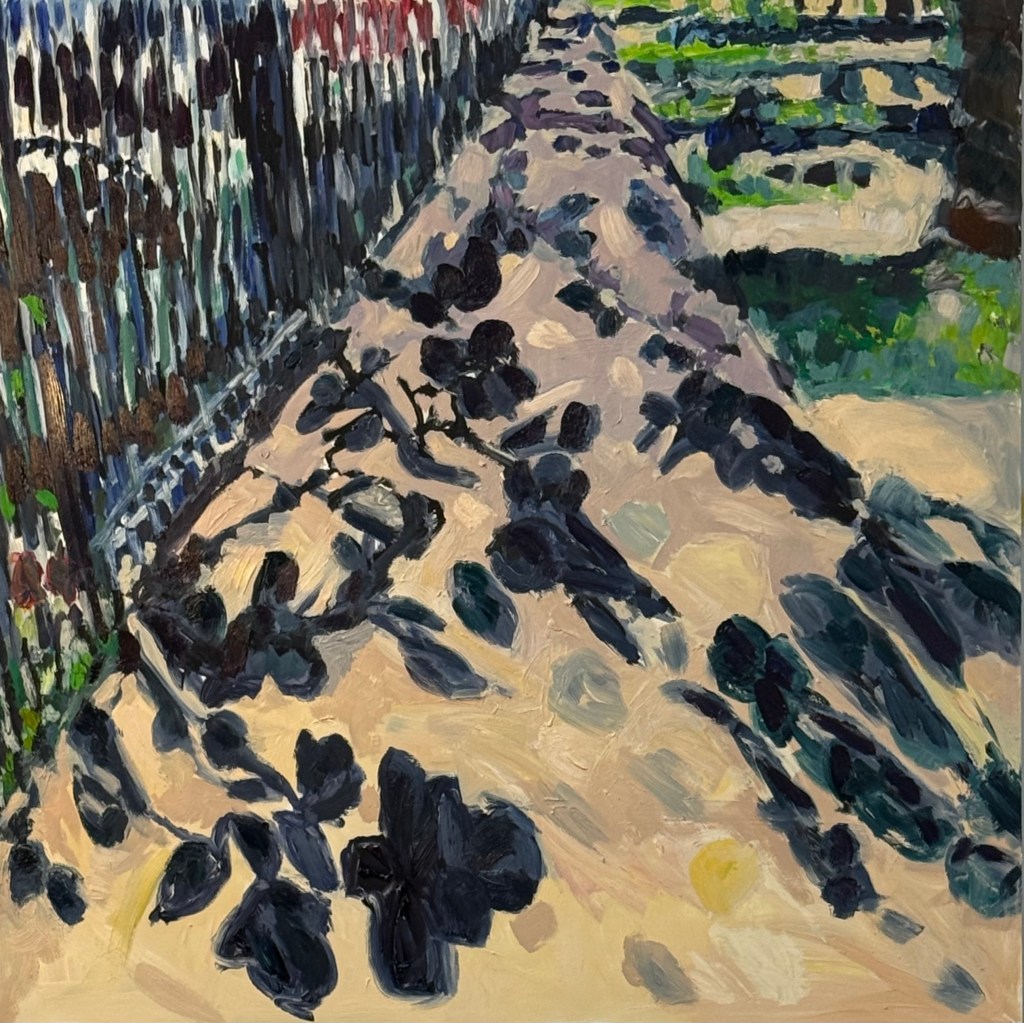
At street level, the same argument becomes quieter. In one sidewalk composition, plant life arrives only through shadow. The leaves themselves are mostly absent, yet their presence crosses the pavement with complete authority. Stronsky withholds the tree. The shadow is enough. It marks the ground, alters the light, and turns an ordinary passage into a brief apparition.
Stronsky’s paintings cannot be reduced to landscape or still life, though they inherit from both. They operate closer to gist memory, where exact details soften while the central impression endures. A site is seen, altered, and returned as oily residue rather than true documentation. A street view is held only as an afterimage. A flower returns to gesture. The Midwest appears not as branding or regional shorthand, but as lived atmosphere carried through color and the physical intelligence of the canvas.
What remains most compelling is the way Stronsky allows material to retain recollection without preserving it too cleanly. Her surfaces are generous without being simple. They invite recognition, then require slower looking. In that sustained attention, the works become less about where the artist has been than how deeply a surrounding can be absorbed. They are not records of location. They are evidence of attachment.