Alien Garden
The Extraterrestrial Organisms of Michelle Stone
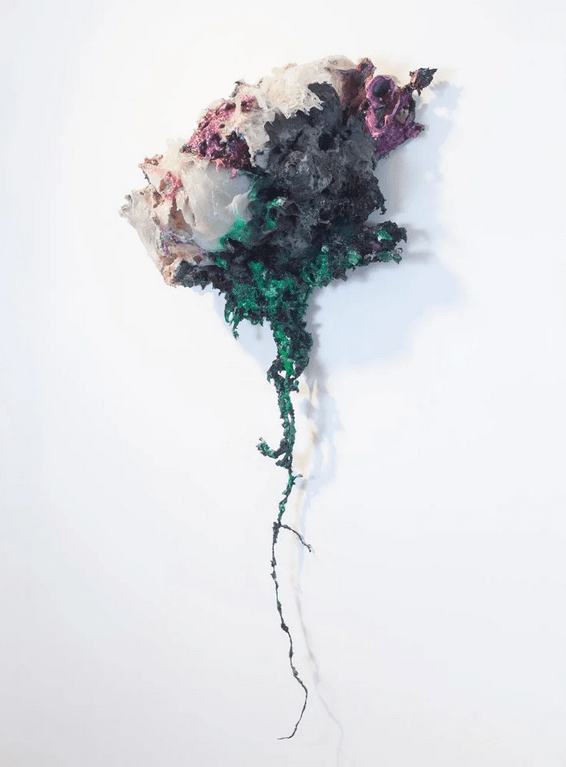
Michelle Stone’s work carries an unsettling familiarity, as though the viewer has encountered these forms before in a half-remembered landscape. Her paintings and sculptures suggest organisms pulled from nature, yet they resist classification, hovering between the botanical and the extraterrestrial.
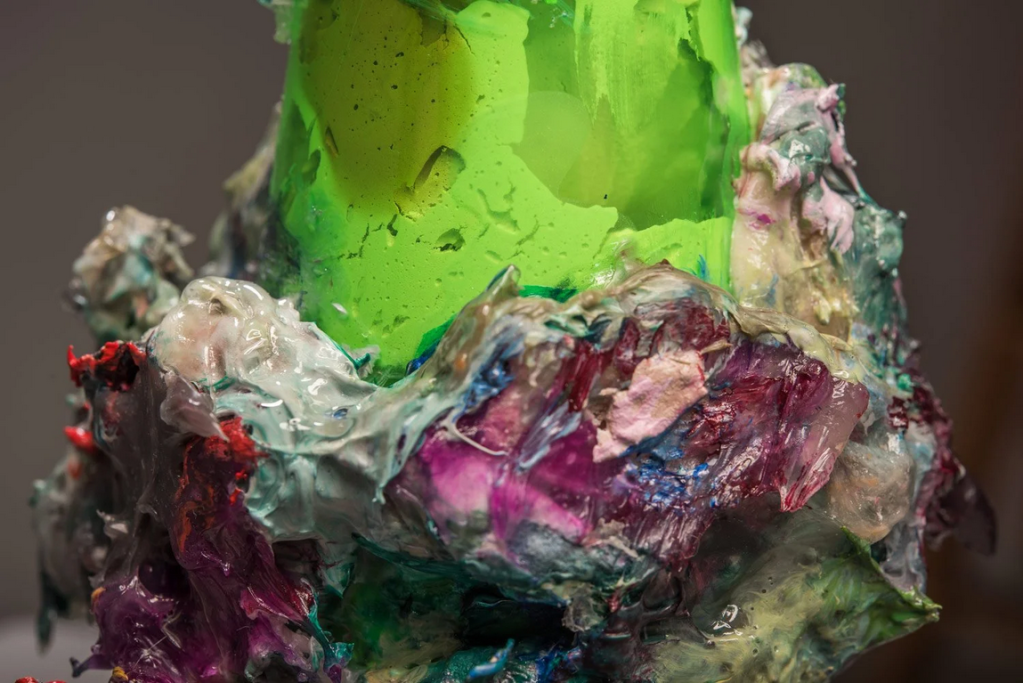
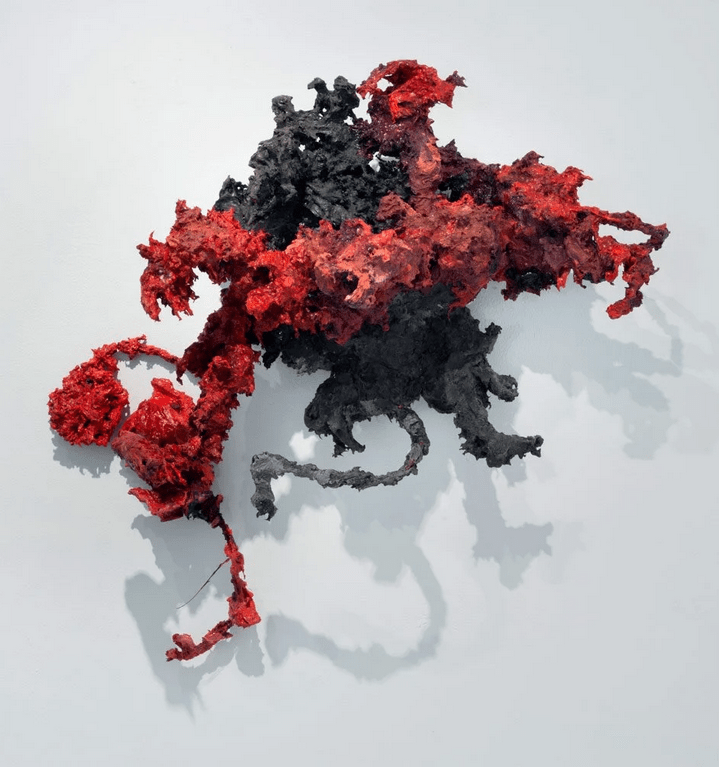
Stone builds this ambiguity through color and texture. She works with palettes drawn from the organic world, saturated greens, acidic oranges, bruised violets, and dense blacks. These hues are natural in origin yet intensified to the point of estrangement. Her materials are layered in thick, imperfect skins that retain the trace of the hand, deliberate but unruly, controlled but never polished into submission.
The result is an ecosystem of forms that seem to grow and decay within the work. Shapes swell, collapse, and reappear, inviting the viewer to search for recognition while withholding certainty. Stone’s practice occupies the threshold between abstraction and figuration, where memory and imagination merge and where the familiar transforms into something unknown.
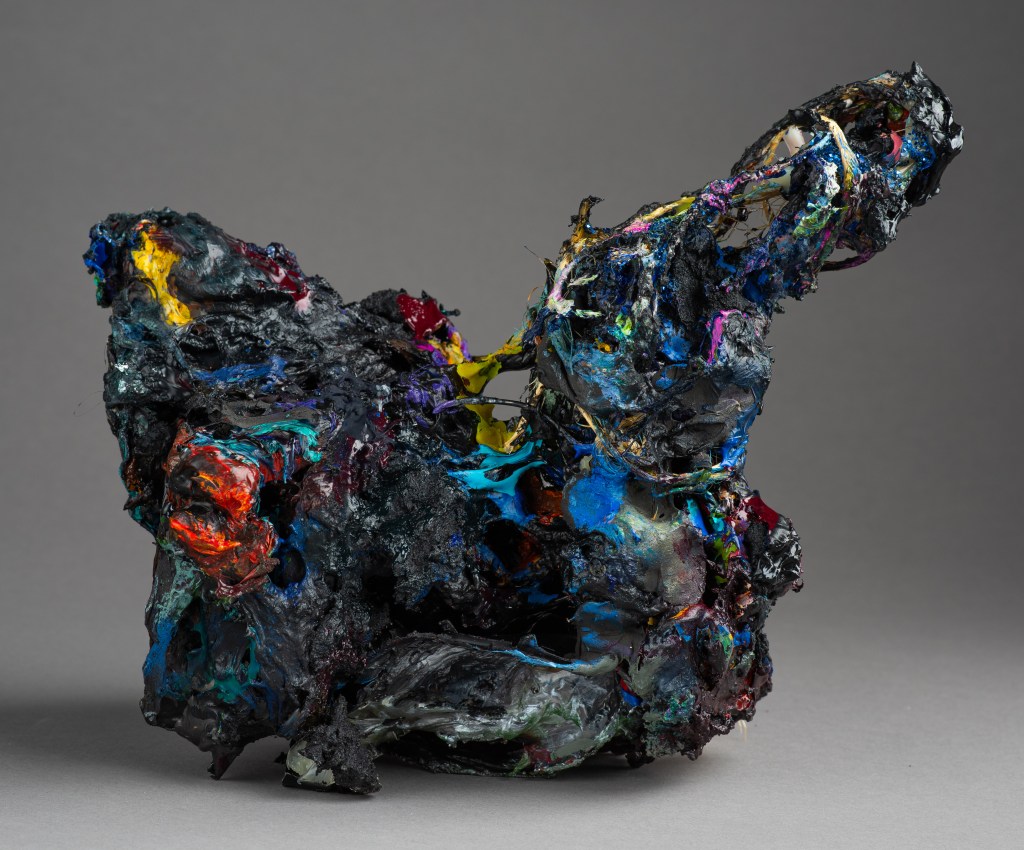
Stone has described her process as an excavation of what lies beneath perception, noting that images surface from memory, intuition, and shadow — explaining that her momentum originates from a life of observation, imagination, and obsession.
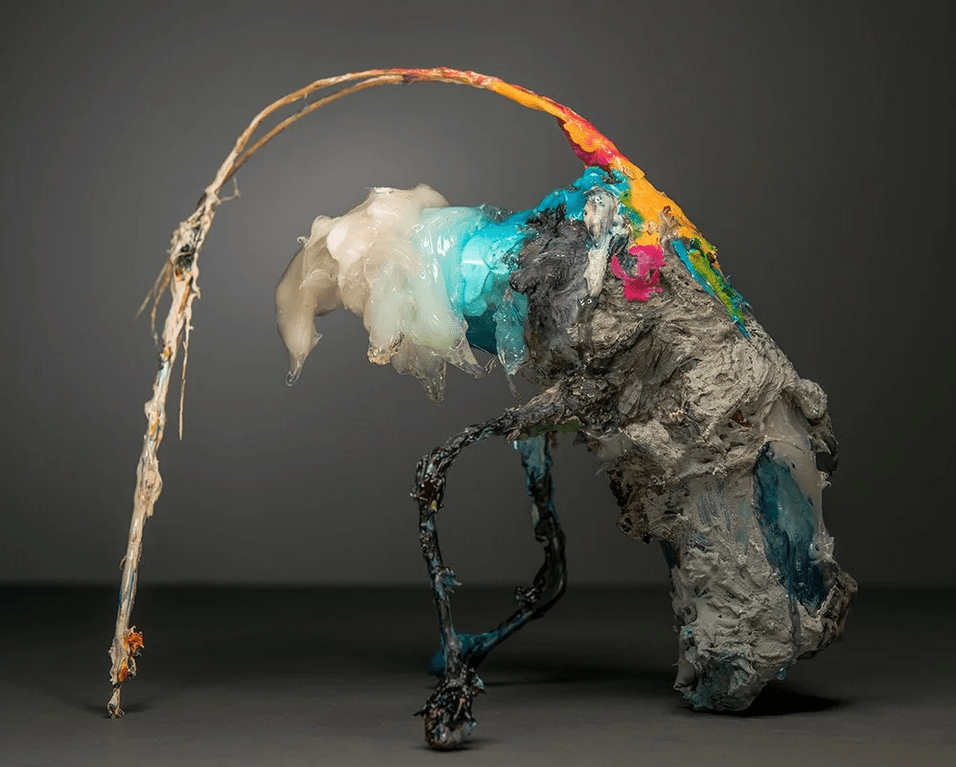
For years she has gathered photographs, fragments of earlier pieces, and discarded objects, allowing these materials to generate an internal energy that becomes the catalyst for visual expression.
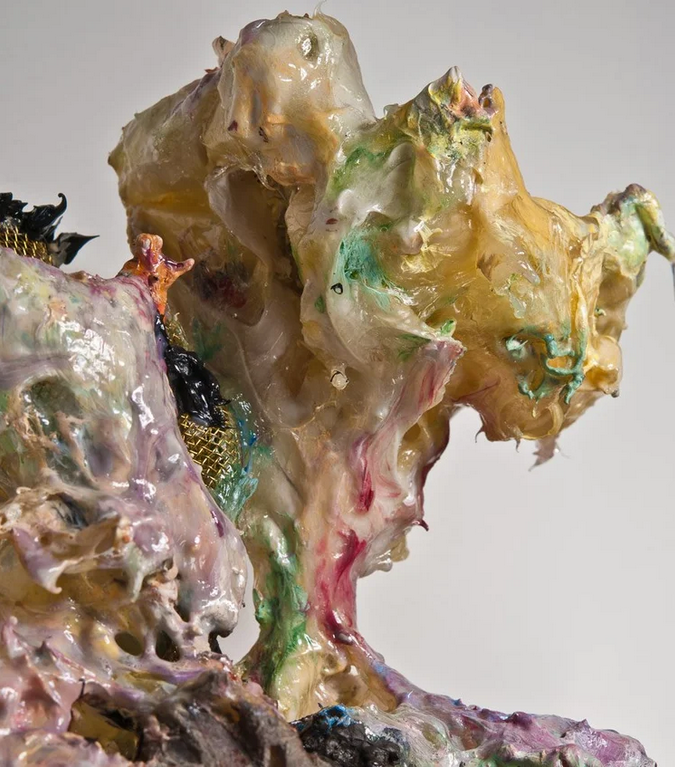
The studio functions as an archive rather than a laboratory, a place where images wait to be uncovered instead of invented, and where accumulation gradually reveals form. This sense of the in-between guides her approach to material as well as meaning.
Textured layers of matte and gloss paint generate hybrid figures that inhabit ambiguous landscapes, reflecting themes of conflict, adaptation, and the interconnectedness of the natural world. Forms appear to breathe or withdraw, suggesting a slow biological rhythm rather than a decisive narrative, and viewers encounter surfaces that feel lived in.
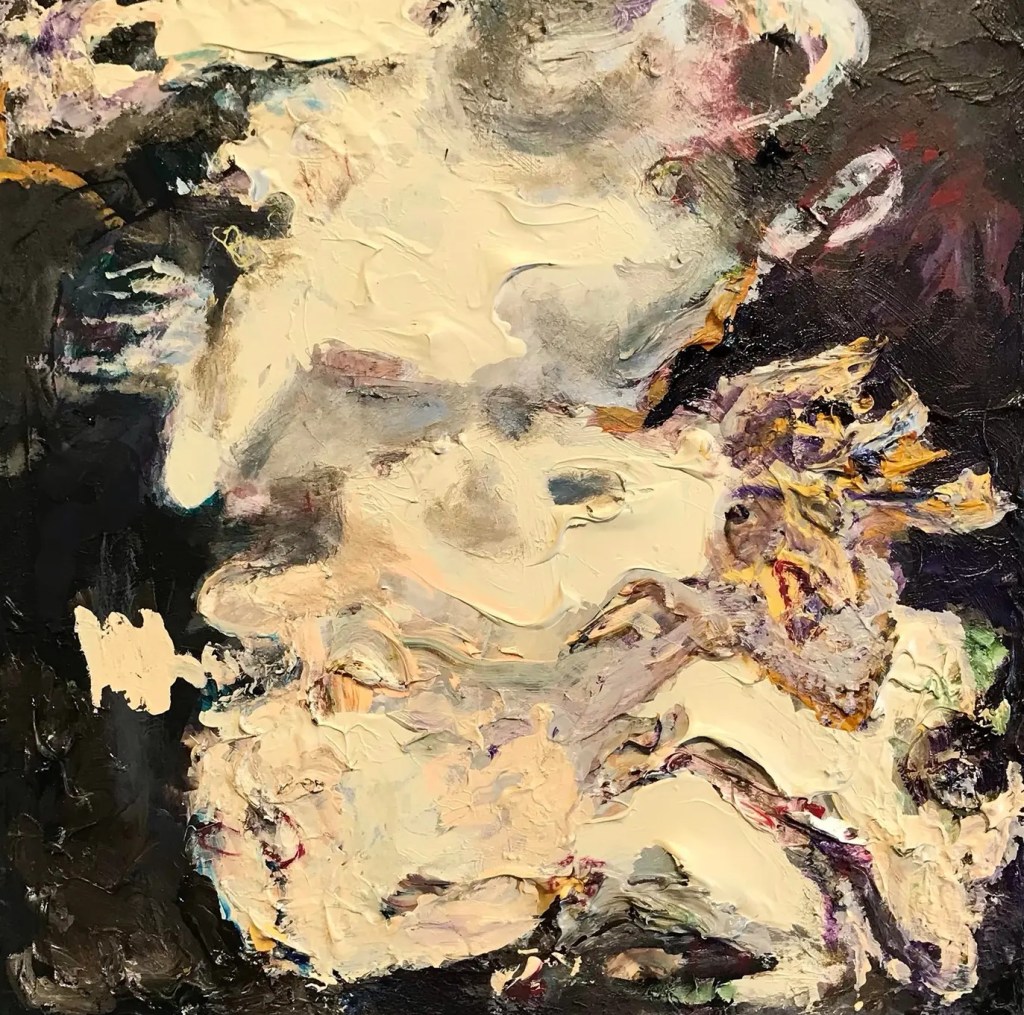
Critics have described her work as brazenly personal, yet Stone maintains that her objective is to capture the inevitability of development and deterioration, the organic process that all living creatures share.
Positioned between Chicago and New York, she continues to develop a language that is both intimate, estranging, and strangely alive. Within her cultivated garden of aliens, forms germinate from memory and shadow, unfurling into organisms that seem both ancient and newly born. The natural world is not presented as it is understood, but as it flickers at the edge of perception, evolving, mutating, and quietly insisting on its own unfamiliar logic.
 Golden Arts Chicago