The Memory of Creation
The Numinous Forms of Andryea Natkin
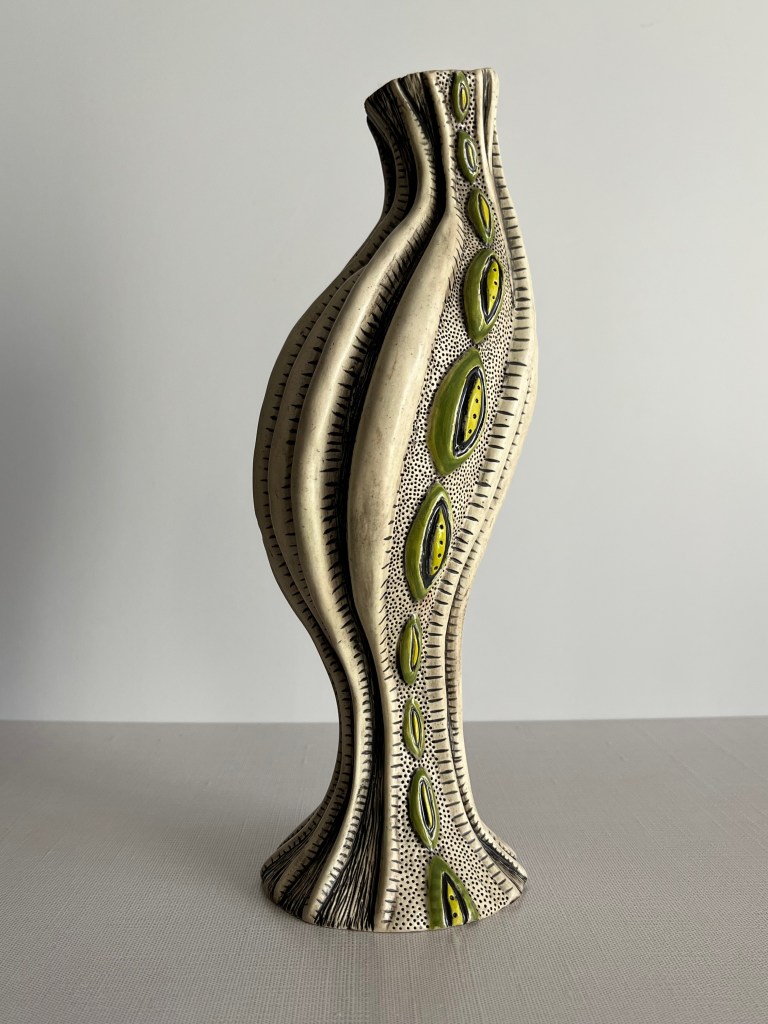
Andryea Natkin’s forms present themselves as divinely wrought organisms, yet they refuse to be rendered as mere objects of fascination, perched on a shelf for our amusement. Their numinous allure draws us in the way a siren might — seductive and faintly dangerous — compelling a slower gaze that fixates and does not easily release. Once pulled close, the looking sharpens into a kind of obsession. We hover over each curve, each incision, each field of color, vacillating over the meaning embedded in shape and texture. The surfaces thrum with internal charge, as if pattern is not embellishment but a nervous system laid bare.
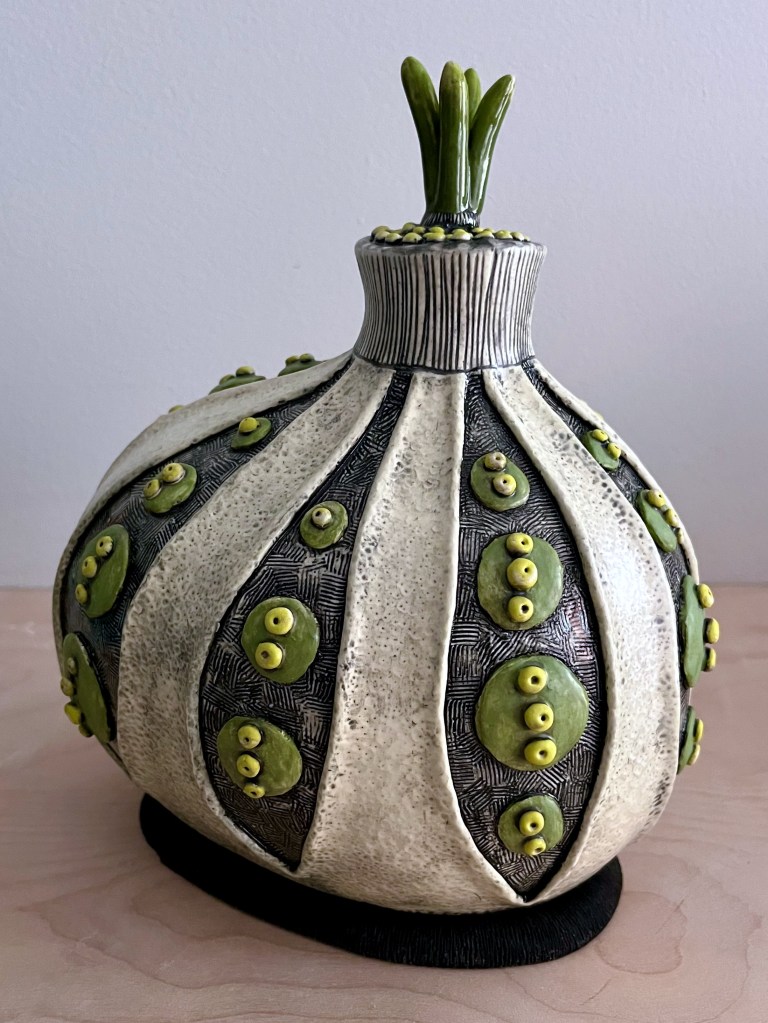
Natkin emphasizes working at the intersection of consciousness and unconsciousness, letting an “inner voice” guide the hand rather than a plan. That framework is useful here. These hand-built bodies hold the pressure of touch. The marks across them read like a private language made public through repetition. She describes the surface as a site for sgraffito, carving, staining, and glaze, and she explains the disciplined choice of black and white as a way to prioritize “bones” and “structure.” The work, however, is not limited to that palette. When color enters, it does not behave like a flourish. It behaves like a necessity, almost liturgical in its placement, as if illumination were required.
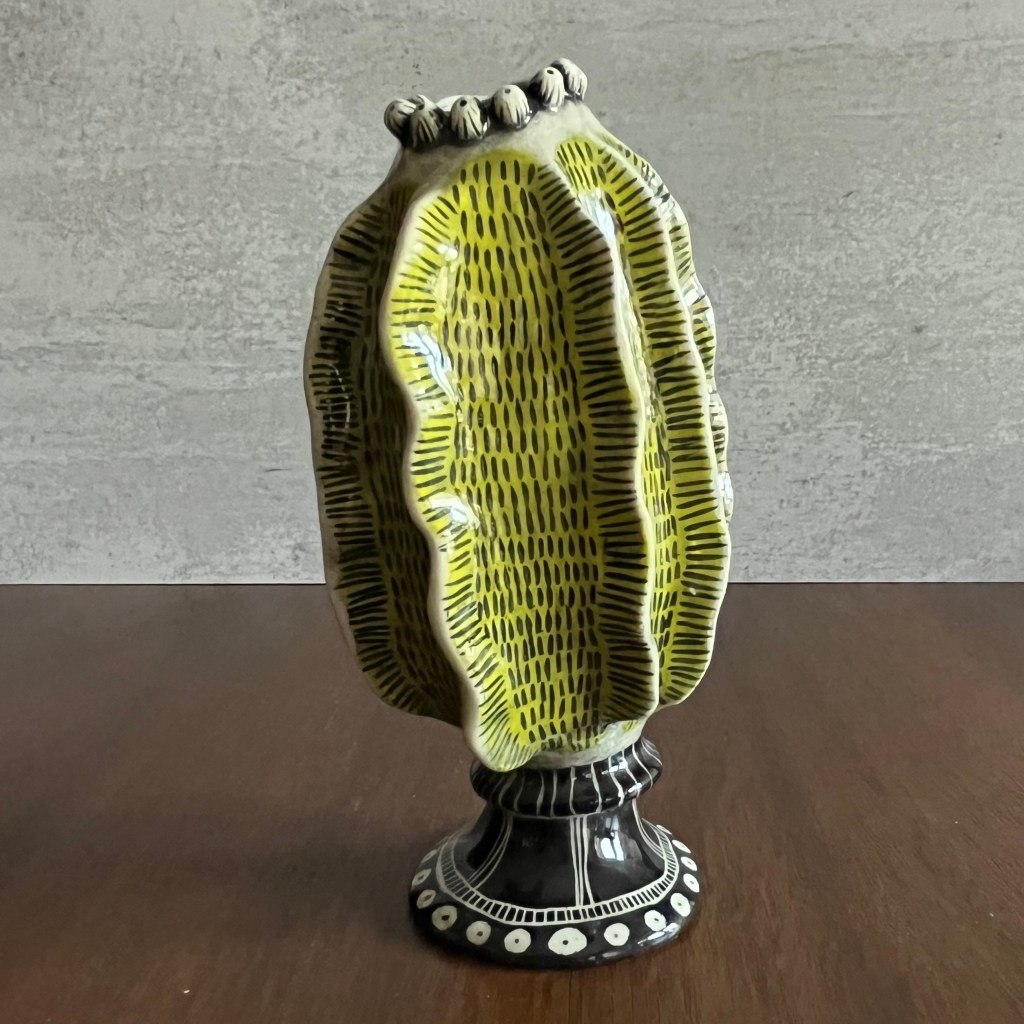
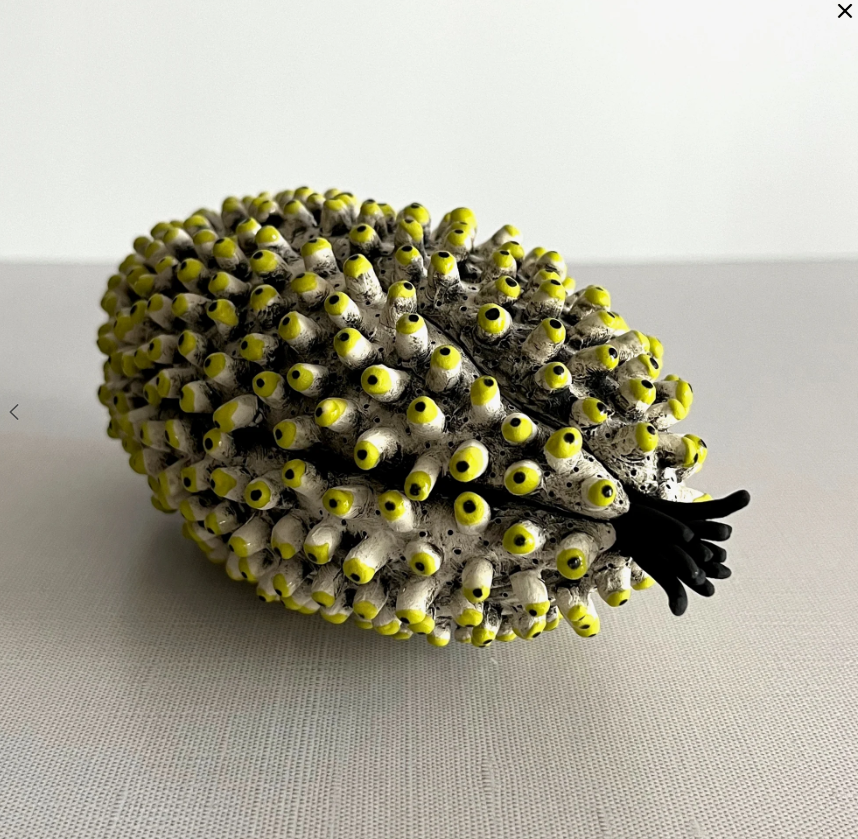
Such is the use of yellow, what I call the “sunflower adaptation” — an evolutionary alteration designed to draw the right beings toward it. Goldenrod striations flare outward in ruffled strata, while black marks cluster and radiate like seeds and straw-like filaments. At close range, the object shifts scale the way a microscope magnifies. You are no longer reading “flower” as a whole. You are reading a system of repeating units: dots, dashes, stippled fields, pulsing edges. The stippling is not merely texture. It becomes a grain of attention, insisting that the viewer remain long enough for surface to register as structure, and structure as something closer to order.
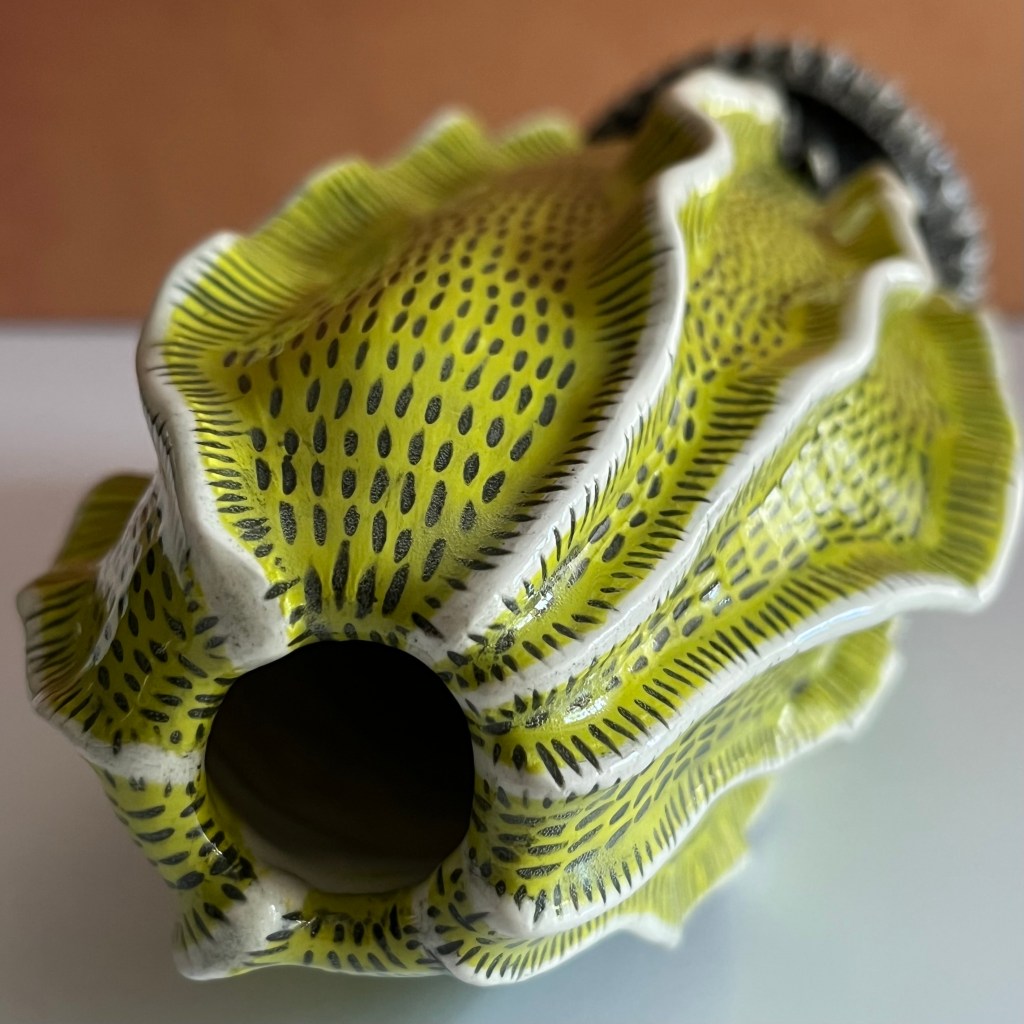
In other works, a particular erotic intelligence begins to surface, and “erotic” here is not a euphemism but a formal condition. The pieces repeatedly return to floral forms that are also unmistakably yonic. They bloom and present cavities and folds. Natkin’s forms do what phallic symbolism has long been permitted to do across art history: harness bodily association as an energy source, one that has, since the beginning of art making, hardened into aggression and cliché. Her work shifts that grammar. It does not thrust and violate the senses. It opens and invites us to enter, to be implicated, to become part of the exchange rather than its object. The erotic here is not conquest. It is aperture. It feels less like dominance and more like revelation.
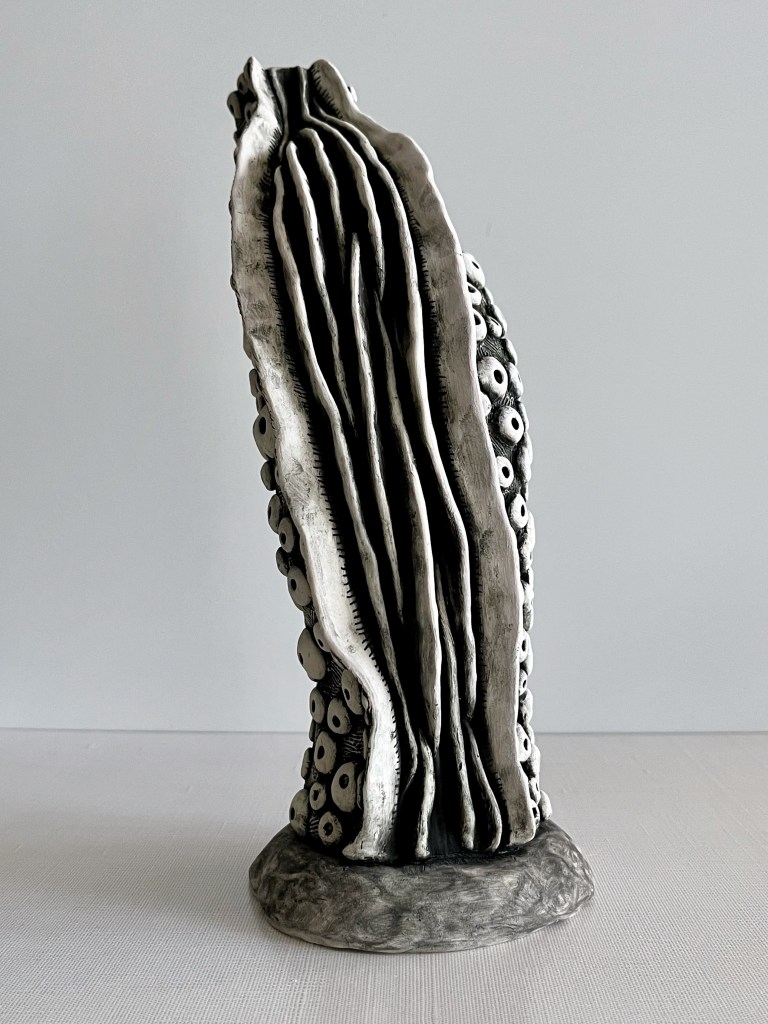
That shift becomes unmistakable in certain organismal forms. One splits into a deep central cavity lined with rib-like bands, and the effect is immediate, though not easily interpreted. It can read as a mouth, and not a polite one. It can also suggest a filter-feeding organism, baleen-like, drawing the viewer inward while the body remains intact. Along the sides, small circular protrusions punctuate the surface like eyes or pores, creating a subtle social pressure. You look, and you also feel looked at. The object does not attack the gaze; it returns it. In that return, something sacred flickers. The form is not passive clay. It behaves like a being.
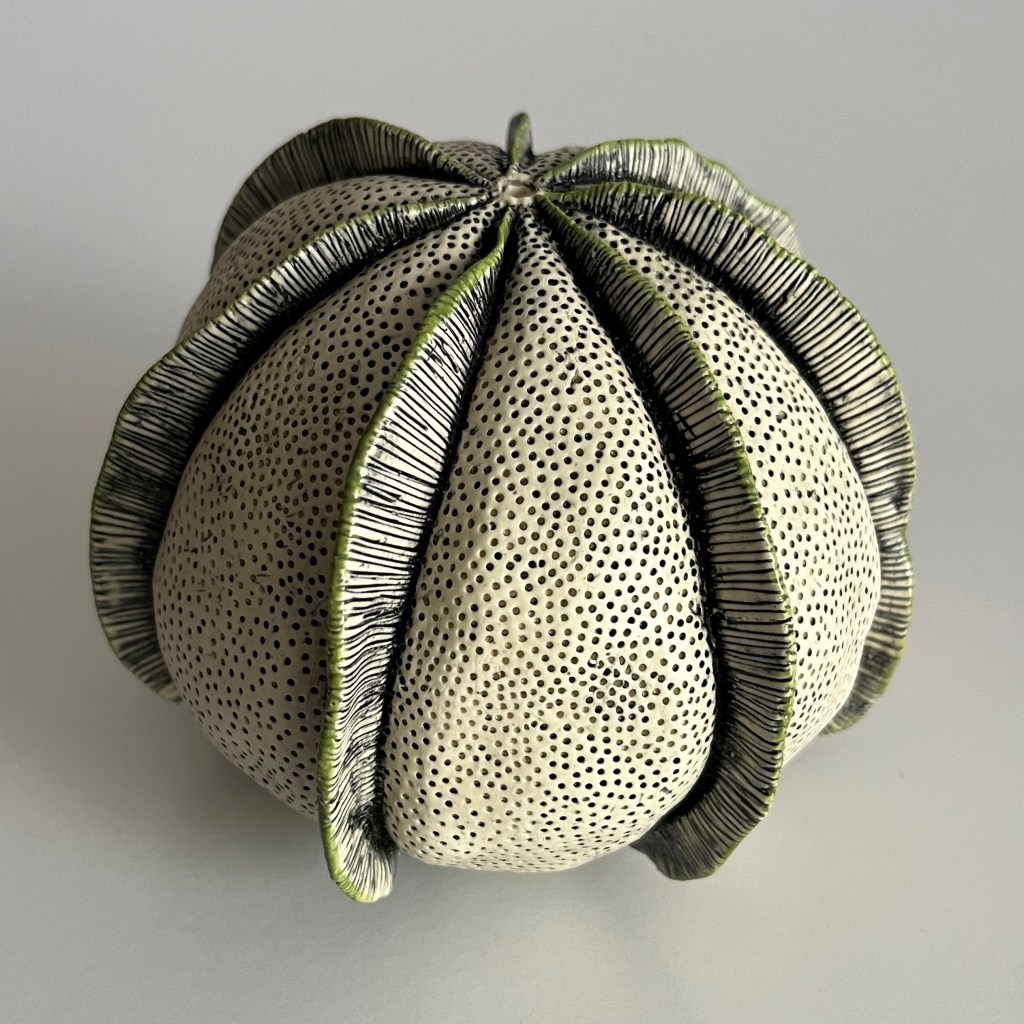
Ultimately, Natkin’s work insists on a recalibration of how we encounter form. These are not decorative vessels, nor are they symbols flattened into metaphor. They operate as presences, structured yet instinctual, intimate yet guarded. By shifting the grammar of bodily association away from assertion and toward aperture, she creates objects that feel less like statements and more like manifestations. They require attention. And in returning our gaze, in meeting us at the threshold of their openings, they suggest that looking is never neutral. It is an exchange. We are not merely observers of these organisms. We stand before them, implicated, as if before something that remembers being made.
 Golden Arts Chicago